
Food and Beverage Distributorship in India: The Ultimate Simple Guide for Beginners (2026)
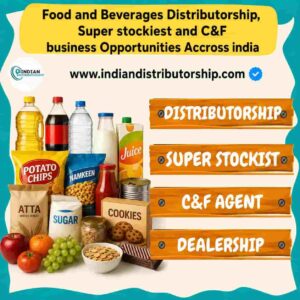
Are you looking for a secure, long term business that makes good money every single day? The food market in India is growing faster than ever before. From chips and biscuits to juices and daily milk, everyone needs food items to live. Because this demand never stops, starting a Food & Beverage Distributorship is one of the safest and most profitable business opportunities you can choose today. This simple guide breaks down exactly how the supply chain works, the total costs involved, how to handle daily challenges, and how you can apply to start your own business easily.
Understanding Distributor, Super Stockist & C&F Agent
Think of the food supply chain as a long highway. It carries goods all the way from a huge factory straight to your local corner grocery shop. To enter this business, you first need to understand the three different roles you can choose from.
Food & Beverage Distributor
A local distributor is the main person who connects brands directly to your local market. In this setup, you buy goods upfront from the manufacturing company or from a big regional stockist. You stock these products in your own local godown and deliver them every day to retail shops, supermarkets, and nearby kirana stores in your specific city areas or pin codes.
This work needs a lot of real ground effort. Every morning, your sales guys, whom people call order bookers will visit retail shops. They check what items are running low, write down new orders, and collect pending payments. The very next day, your delivery autos or mini-trucks load up those exact boxes and drop them off at the shops. This business is entirely about managing your local area, driving your sales team, and keeping deep personal relationships with shopkeepers.
Super Stockist
A Super Stockist works like a massive wholesale hub for a whole district or a cluster of small towns. Instead of dealing with thousands of tiny retail shops one by one, your main buyers are smaller, town-level sub-distributors. These smaller guys usually cannot buy directly from the big brand because their budget is low.
Super Stockists handle huge shipments. You will often receive full, massive truckloads of goods directly from the company factory. Since you keep a massive amount of stock in your warehouse, you make sure that smaller local dealers never run out of products. This model requires a lot more money upfront to purchase big bulk orders, but running it is much simpler on a daily basis because you deal with just a few big wholesale clients instead of a massive crowd of shopkeepers.
C&F Agent (Carrying and Forwarding)
A Carrying and Forwarding (C&F) Agent runs the main state-level storage and logistics hub for a brand. This business works on a consignment basis. This simply means you do not buy or own the stock. The company owns all the inventory while it sits inside your facility.
Your main responsibility is professional warehousing and safe logistics. When local distributors or Super Stockists place orders with the company, your warehouse team packs those items and schedules the transport trucks to ship them out safely. Instead of making a profit by selling goods, you receive a fixed monthly handling fee or a small service commission for every single box that comes into and goes out of your gate. This role requires a large commercial property and a heavy security deposit with the company.
Investment Requirements for Food Distributorship, Super stockiest and C&F
To start a successful FMCG distributorship, you must plan your budget with care. A huge mistake most new beginners make is spending all their cash just buying the first batch of stock. This leaves them with zero money to cover daily running expenses while they wait for shopkeepers to pay them back. You need to divide your money into three clear parts: setup costs, first stock purchase, and a running cash reserve.
Food & Beverage Distributorship Investment Cost in India
For a local town-level food distribution setup, setting up a secure godown and a small billing office usually takes around 1.5 Lakh to 3 Lakh rupees, depending on your local rent rates. Buying your very first stock load from the factory will take about 3 Lakh to 8 Lakh rupees. On top of that, you must keep a working capital cash buffer of 2.5 Lakh to 6 Lakh rupees to handle daily market expenses safely when shopkeepers ask for time to pay. Companies also ask for a refundable security deposit of 1 Lakh to 3 Lakh rupees. This brings the total estimated budget for a local distributor to around 8 Lakh to 20 Lakh rupees.
Super Stockist Investment Cost in India
For a district-level Super Stockist, things get bigger. Setting up high-density vertical iron racks to store heavy goods will cost around 4 Lakh to 8 Lakh rupees. Your first bulk stock purchase will be much higher, ranging between 12 Lakh and 35 Lakh rupees, because you have to supply multiple towns. You will need a liquid cash reserve of 9 Lakh to 27 Lakh rupees for daily rotation, and a brand security deposit of 5 Lakh to 10 Lakh rupees. The total capital needed for a Super Stockist usually sits between 30 Lakh and 80 Lakh rupees.
C&F Agent Investment Requirements
A state-level C&F Agent requires serious corporate funding. Setting up a massive warehouse with modern stock-tracking systems and temperature control can cost 15 Lakh to 40 Lakh rupees. Even though you do not buy the stock yourself, you need a solid cash reserve of 10 Lakh to 25 Lakh rupees to handle heavy transport arrangements and big staff salaries. Corporate security deposits for a whole state range from 25 Lakh to over 1 Crore rupees, making the total investment around 50 Lakh to 1.65 Crore rupees or even more.
(Note: These figures are general market estimates. Actual costs change depending on the brand you choose, your exact city location, and local property rents.)
Profit Margins & Revenue Potential
In the food distribution line, you do not make a massive profit on just a single packet. Instead, you make real money through high-volume sales and fast stock rotation. You win by rolling your cash multiple times every month. Gross margins across different categories range from 2% to 20%. But after paying your godown rent, staff wages, vehicle fuel, and the cost of broken or damaged packets, your final net profit margin will settle down between 1.5% and 5.5%. These margins change completely based on how fast a product sells out.
Profit Margin in Daily Staples & Fresh Dairy Distribution
Daily staples and fresh dairy goods like milk, bread, and dahi have very small margins of 2% to 5%. However, they fly out of your warehouse almost every single morning. This brings in fast, steady daily cash that helps pay your basic running bills.
Profit Margin in Packaged Snacks, Biscuits & Namkeen Distribution
Packaged snacks, biscuits, and namkeens offer a reliable, balanced margin of 6% to 12%. They come with long expiry dates and have strong customer demand, making them the real financial backbone for any local distributor.
Profit Margin in Soft Drinks, Juices & Energy Drinks Distribution
Soft drinks, juices, and cold energy drinks give much better margins, between 8% and 15%. This is a highly seasonal line, meaning you can make fantastic profits during the hot summer months if you stock up heavily and manage your storage space well..
Profit Margin in Frozen Foods & Ice Cream Distribution
Frozen foods and premium ice creams offer the highest margins, ranging from 12% to 20% gross. But they carry high risks. You have to invest in deep-freezer units that run 24/7, and you face direct financial losses if power cuts or delivery delays cause the food to melt and spoil.
(Note: Brand margins and trade offers keep changing based on company schemes, festival discounts, and tax updates. It is always best to check them directly with the company.)
Documents & Compliance
To run a legal and successful Food & Beverage Distributorship in India, you must complete a few essential registrations before partnering with any brand.
FSSAI License
An FSSAI License is mandatory because you will be storing and supplying food products. Local distributors usually need a State License, while larger Super Stockists and C&F Agents may require a Central License. Your warehouse should also meet basic food safety standards.
GST Registration
A valid GST Registration is required for B2B billing and claiming Input Tax Credit (ITC). Filing GST returns on time also helps build credibility with leading FMCG companies.
Shop & Establishment License
You also need a Shop & Establishment License from your local authority to operate your warehouse or business legally.
Business Registration
Register your business as a Sole Proprietorship, Partnership, or Private Limited Company. This is essential for opening a business current account and working with most brands.
Step-by-Step Application Process
Getting a highly profitable, exclusive sales area for your business requires a simple, step-by-step plan.
1. Market Analysis and Gap Identification
Spend a week roaming around retail stores in your area. Talk directly to shopkeepers to find out which food brands have bad delivery schedules or are frequently out of stock. Finding a popular product category that lacks a good local distributor highlights a perfect market gap for you to jump in.
2. Brand Tier Selection Strategy
New beginners often try to partner with the biggest, most famous heritage brands right away. But these giant companies demand massive investments and give very small profit margins. A smarter way is to start with fast-growing regional brands or new national companies. They routinely offer much higher profit margins, larger exclusive areas, and great sales support on the ground.
3. Infrastructure Allocation and Logistics Real Estate
Find a dry, clean, airy godown in a proper commercial area. Make sure it has an elevated floor to protect cardboard boxes from ground dampness and wide roads so delivery autos can load easily without getting stuck in traffic. For local transport, go for fuel-efficient mini-trucks or modern electric cargo three-wheelers to save big on daily fuel bills.
4. Corporate Application Channels
You can find excellent distributorship opportunities in India through three easy routes: applying directly on a brand’s official website, meeting regional sales managers in person during their field market visits, or using professional business networks like IndianDistributorship.com to connect instantly with verified brands that are actively searching for new partners in your specific town or district.
Operational Challenges & Solutions
Running a daily distribution business comes with regular risks. Managing them smoothly is what keeps your business profitable.
Managing Retail Credit Risk
To snatch sales away from older competitors, new distributors often make the mistake of giving loose, long-term credit to local shops. When shopkeepers delay these payments, your cash gets trapped in the market. This leaves you with no money to buy your next stock load from the factory, bringing your business to a complete halt.
The Solution: Set a strict credit limit from day one. Follow a simple rule: if a retail shop has two unpaid bills pending, stop all new deliveries completely until they clear their old balance. You can also offer a small 1% discount to reward shop owners who pay in hard cash instantly upon delivery.
Warehouse Shelf-Life and Expiry Management
Food items come with fixed expiry dates. If your warehouse helpers are lazy or unorganized, new stock gets piled in front, while older factory batches get pushed to the back of the racks, expire silently, and turn into a total financial loss.
The Solution: Enforce a strict First-In, First-Out (FIFO) layout. Ensure that every new batch from the factory is loaded behind the current stock, forcing your team to pick the older boxes first. Run a physical inventory check every single weekend to catch any items nearing a 60-day expiry window so your sales team can clear them out using buy-one-get-one retail deals.
Route Planning and Field Staff Management
The Indian FMCG sector has a big problem with sales reps and delivery drivers quitting suddenly. When a worker leaves without telling you, your daily route stops, and rival brands instantly take over your store shelves. Also, poorly planned driving routes waste expensive fuel.
The Solution: Stop paying just a low flat salary. Switch to a smart incentive model. Give a fair base salary combined with small daily or weekly bonuses for hitting targets like opening new shop accounts, increasing the order size, or bringing back old market payments. Use basic map apps to ensure your delivery vehicles take the shortest, most efficient paths every single day.
Growth Opportunities in India
The Indian consumer market is changing fast, creating highly profitable avenues for modern, adaptive distributors to focus on market expansion.
The Impact of Quick Commerce Integration
The sudden rise of 10-minute grocery delivery apps is completely changing urban retail. These apps operate through tiny, hyper-local dark stores spread across neighborhoods. Because these dark stores have very little storage space, they need local distributors who can deliver fresh stock multiple times a day. Upgrading your delivery speed to support them opens up a massive new revenue stream.
The Rise of Premium, Functional, and Better-for-You Products
Modern Indian shoppers are looking for healthier lifestyles, leading to huge demand for organic grains, low-sugar drinks, high-protein snacks, and clean food. These premium, specialized categories carry much higher profit margins than basic mass-market items. While they take a bit more effort to sell, you face almost zero price competition from old-school traditional wholesalers.
Modern Digital Supply Chain Integration
Relying on old paper notebooks and manual records slows down your growth. Successful modern distributors use digital Dealer Management Systems (DMS) that connect directly with the manufacturing company’s software. By adopting digital stock tracking, GPS delivery routes, and instant phone payments, you can eliminate errors, cut your daily running costs, and build a highly professional operation that can easily scale up to cover neighboring towns.
Frequently Asked Questions
1. What is the process for starting a food distribution unit from scratch?
You need to secure a clean commercial warehouse, obtain your mandatory FSSAI food license and GST registration, open a business current bank account, and research product gaps in local stores. Then, apply to your target brands directly or use trusted B2B matchmaking networks like IndianDistributorship.com to secure your area rights.
2. How do the operational profiles of distributors and Super Stockists differ?
A local distributor works deep inside city wards, sending sales reps to individual retail stores every morning to collect small case orders for next-day delivery. A Super Stockist operates at a larger wholesale tier, holding massive bulk inventory to supply smaller town-level sub-distributors across a large district.
3. How much working capital should be kept as a cash reserve?
It is highly recommended to keep at least 30% of your total business capital as a liquid cash reserve. This safety fund guarantees you can always pay the manufacturing company for your next inventory run on time, even when local retail shopkeepers delay their weekly bill payments to you.
4. Is product distribution a sustainable business model given rising fuel costs?
Yes, absolutely. Because food and beverages are non-discretionary daily essentials, market demand remains completely stable. You can easily protect your trading margins against rising fuel costs by using smart route optimization apps and maintaining a high inventory turnover rate.
5. What core documents must be presented during corporate brand onboarding?
You must present a valid FSSAI food license, an active GST certificate, corporate PAN details, municipal shop permits, a registered warehouse lease agreement, and recent personal or business income tax returns to prove your financial standing.
6. Where can investors identify verified regional Super Stockist openings?
Investors can connect with regional FMCG corporate sales managers, visit major trade expos, or leverage professional online B2B networks like IndianDistributorship.com, which safely match verified manufacturers with qualified channel partners across India.
7. What is the primary role of a C&F agent compared to a traditional stockist?
A C&F agent operates a large-scale regional warehouse hub strictly on a consignment basis without purchasing the goods. They handle large state-level storage, inventory tracking, and primary dispatch logistics for the manufacturer, earning a reliable handling fee or commission per case.
Conclusion
Starting a Food & Beverage Distributorship, Super Stockist, or C&F Agency can be a smart long-term business opportunity in India. Since food and beverage products are everyday essentials, demand remains steady throughout the year. With the right investment, a trusted brand, and efficient operations, you can build a stable and profitable distribution business.
Success in this industry depends on choosing the right company, maintaining proper business compliance, managing inventory efficiently, and building strong relationships with retailers. Using modern logistics and digital tools can also help improve daily operations and support long-term business growth.
Apply for Food & Beverage Distributorship Opportunities
If you are planning to start a Food & Beverage Distributorship, Super Stockist, or C&F Agency, this is the right time to explore available business opportunities. Many FMCG brands are actively looking for reliable distribution partners across India.
Submit your business inquiry today to connect with verified FMCG companies and explore distributorship opportunities that match your investment, location, and business goals.